Sunday, November 22, 2015

TOW #10- Acura Safety Commercial


“When you don’t think of them as dummies, something amazing happens”. This was the quote from one of the best commercials I’ve seen in a while. This week I chose an Acura commercial as my TOW. I saw this commercial on TV and although most commercials usually annoy me, I thought this commercial was very powerful. The author, who is obviously Acura, is a big name car company. In the commercial they are expressing the idea that their cars are very safe and that safety features are important to the making of the car. To do this the commercial take place in a car safety center where they crash cars in order to see how safe they are. A man walks into the scene and turn on the lights. Dramatically he starts loading safety dummies into a car that they will crash. Only thing is that these dummies are human people who just don’t move. After loading them in he gives them a serious look and then launches the car. Then it goes to a black screen saying the quote I used earlier.
            The thing that makes this commercial so effective is the juxtaposition between the dummies and the humans. Because Acura swaps them it send a message to the audience. It reminds them that Acura doesn’t just make a car without considering the safety of the people, the audience. The use of humans instead of dummies makes the commercial a lot more personal and makes you appreciate Acura for caring about us.
            On top of that, another tool widely used throughout the commercial is dramatic music. People often don’t think about the music that goes into TV and movies but if it wasn’t there, things would be completely different.  Acura is obviously talking about the safety of drivers so they needed music to exemplify their tone, seriousness. The music makes it a little sad but shows that safety isn’t a joking matter to them. This helps express their idea that safely matters most.
            I thought the commercial was very powerful and very good. You can watch it with this link below:


Sunday, November 15, 2015

TOW #9- Borrowing From Solar and Chip Tech to Make Diamonds Faster and Cheaper By JOHN MARKOFF

     
(A picture from the original article. Depicts the atomic structure and look of the synthetic diamonds)

    It can create smiles and it can create wars. Diamonds are one of the most sought after substances in the world. Until recently diamonds have been mined in unethical and environmentally unfriendly ways but as outlined in the article “Borrowing From Solar and Chip Tech to Make Diamonds Faster and Cheaper” by John Markoff, scientists have created a new technique to synthesize these diamonds in a lab. Although synthetic diamond aren’t a new technology, John Markoff, a senior writer for the New York Times, explains how technology from a solar power company has help develop a new way to make them which costs just as much as the ones that are mined. By layering these diamonds one atomic layer at a time, these new diamonds can be made in a lab using plasma. Written for a general audience, the author uses well-chosen facts in order to exemplify how revolutionary this technology can be.
            Throughout this article, the author uses these facts to show how similar the diamonds are to natural ones. In the article Markoff writes, “According to Mr. Roscheisen, the new process will make it possible to manufacture large quantities of Type IIa diamond, a pure white material that represents 1 to 2 percent of all natural diamonds” (Markoff para 11) . This quote utilizes two different devices. It quotes a reliable source and then gives a statistic. The combination of these two allow for the audience to better believe the statistic given. The audience can better understand how closely related these diamonds are to the ones that come from the earth. Then when Markoff goes into talking about how this could stop the unethical extraction of natural diamonds from the earth, this quote helps show why it would stop the mining of diamonds.
            I believe that Markoff achieved his purpose well and made the article very hopeful for a future without blood diamonds. 

Link:
http://www.nytimes.com/2015/11/12/science/borrowing-from-solar-and-chip-tech-to-make-diamonds-faster-and-cheaper.html?rref=collection%2Fsectioncollection%2Fscience&action=click&contentCollection=science&region=rank&module=package&version=highlights&contentPlacement=6&pgtype=sectionfront&_r=0

Wednesday, November 11, 2015

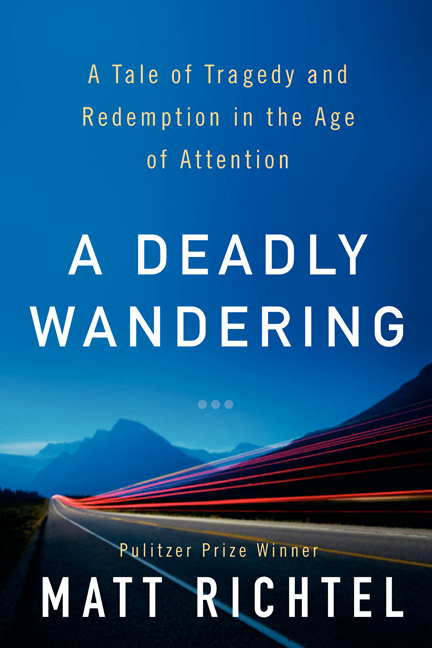
IRB #2- A Deadly Walking by Matt Richtel

       For my second IRB I decided to read A Deadly Walking by Matt Richtel. It is a book about how our mind isn't meant to multi-task. It is set up in a way which shows the true dangers of activities such as texting and driving. I was recommended this book by my mother. Because I am a young driver she believes this book will be good for me.

Sunday, November 1, 2015

TOW #8- IRB #2: This Changes Everything by Naomi Klein

          My IRB, This Changes Everything by Naomi Klein, was a book written for people like me. Part 2 and part 3 of this book, which was the second half of my read went into many persuasive details. The Intro and part 1 laid out the problem while the rest laid out the solution. Although climate change and global warming is a major problem, it lacks the backing that a real movement needs. Many people believe that science will come up with a solution to our crisis but results can’t be predicted. Many think that the rich can help us, like Richard Branson, a billionaire who donated 3 billion towards the cause yet the money did nothing. And many believe that there isn’t a problem at all. This books purpose was to show that the only solution, the only viable solution, starts with us readers. I don’t think much of global warming and believe it to be not that big of a worry, but I have the wrong mindset. The only solution to this crisis that Klein lays out in this book is through the power of democracy. “Only mass social movements can save us now.” This book was meant to persuade bystanders to the issue, like me, to help fuel this crisis and change our capitalistic system that relies so heavily on coal and she did this well.
            A device that I would like to comment on was how Naomi Klein juxtaposed the global warming crisis to slavery. In the past part of the book, Klein writes, “While not equivalent, the dependency of the U.S. economy on slave labor—particularly in the Southern states—is certainly comparable to the modern global economy's reliance on fossil fuels” (456). I honestly thought this was a very bold move by Klein. Slavery is a very touchy topic, even today, so for Klein to compare it to this crisis is risky. Someone could take it the wrong way that would only demean her purpose. She is trying to convince people that this is a serious crisis and comparing it to slavery doesn’t seem to help that what so ever.
            This was a very interesting book and very well written. Although that last part with slavery kind of confused me a bit I thought the rest of the book was spot on.


(This picture comes from an article titled "10 Terrifying Before and After Photos That Will Silence Global Warming Deniers." I think that if my IRB had any pictures to go along with it, pictures like these would help)

Monday, October 26, 2015

TOW #7- The Anatomy Lesson of Dr Nicolaes Tulp by Rembrandt


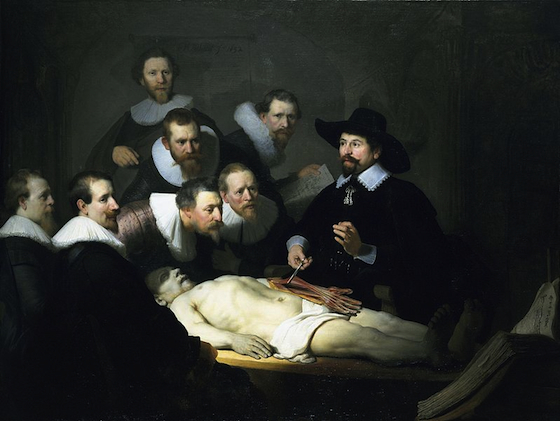
           For my TOW this week I decided to do The Anatomy Lesson of Dr Nicolaes Tulp by Rembrandt. This piece was made my Rembrandt who was famous painter during the 1600’s. This painting was the one that grew his reputation as a painted and what made him as famous as he was at the time.
            This oil painting depicts Dr. Nicolaes Tulp who was a well know Dutch surgeon. In the painting he is giving a lecture to a class where he is dissecting the forearm in order to show how the muscle system works. The men around Dr. Nicolaes Tulp are students. Rembrandt painted this painting in order to celebrate Dr. Nicolaes and his accomplishments, but to also show the psychological aspect of death. This was his overall purpose and it can be seen from the faces of the students.

            In the painting one of the first things you notice is the dead body. Rembrandt purposely made this bright in order to show it. Then the other bright objects are the faces of the people around the body. Each student has a different facial expression going on and this is meant to represent the different way people perceive death. For instance one man is hunched over and studying it hard while other can’t even look at the dead body. All of these are different because everyone perceives death in a different way. From this, Rembrandt wants to convey to a surgeons guild (who was the original audience for this piece) just how fragile the life of a humans is and how others perceive death. With his use of dark colors and facial expressions, Rembrandt expressed this purpose well.

Sunday, October 18, 2015

TOW #6- After Shootings, Varying Shades of Recovery at Charleston Church by Richard Fausset

        
(A picture from the original article taken from the back of the Charleston Church, where 12 members where killed by a gunman in June)  


            It has been four months since the Charleston Massacre has occurred where 12 victims from the Emanuel A.M.E. Church were killed by a gunman. This article’s purpose was to focus on the recovery of the church and the people with in and this purpose is achieved well. According to the article it was a slow recovery for the church. As people entered for the first time they were confronted with the memories of what happened. In the walls there were bullet holes and some of the church had to be redone. Despite all of this the church still manages to go on. With support from the entire country the church was donated two million dollars and as the author, Richard Fausset, a national corresponant, for the New York Times puts it, the church still preached words of hope.

            The most powerful part of this article was the change in tone that happened throughout the article. In the beginning the article has a depressing tone. When describing the background of the massacre, the author says, “Four months after one of the worst racially motivated massacres in recent American history, the members of this historic African-American church are laboring to return to the everyday rhythms of worship. But they also know that things will never be the same” (Fausset 1). This line uses diction like “massacre” to get a sad and depressing tone. This tone continues then throughout the beginning of the article to appeal to the emotions of the audience, the American people. Then towards the end of the article this tone switches into something hopeful. Come the end of the article the author says, “It is a perspective, he said, that makes it possible, in the hardest times, to carry on” (Fausset 1). This quote is meant to leave the audience with this feeling of hope when they finish the article. With the combination of the depressing tone in the beginning to the hopeful tone at the end, the author is able to express a lot of emotions through this article in order to show the recovery of the Charleston Church after such a horrendous massacre.  


Link: